
COPD information
|
Chronic Obstruction Pulmonary Disease (COPD) is a long-term lung condition characterised by breathlessness, coughing, and increased mucus. This leads to blocked airways (bronchioles) and damaged air sacs (alveoli). Lets break COPD down… Chronic = long term (does not go away) COPD is an umbrella term which includes: COPD is progressive and irreversible. However, with good management and support, people can live long and healthy lives. The main causes of COPD are smoking, exposure to air pollution, or genetic factors like alpha-1-antitrypsin deficiency (emphysema) Chronic Bronchitis – The presence of sputum production and long-term productive cough for three months during two consecutive years when other lung or heart causes for these symptoms have been excluded. Emphysema – Abnormal, permanent enlargement of the air spaces (alveoli) at the bases of the lungs, accompanied by destruction of their walls Imagine your air sacs are a bunch of grapes. Instead of having several separate grapes, you instead have one large grape.
Illustration courtesy of healthflexhhs.com |
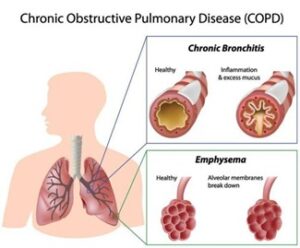
In New Zealand, around 14% of adults aged over 40 years live with COPD. It is a big reason people end up in hospital so early detection, diagnosis, treatment and support is important.
If you think you or someone you care for might have COPD, it’s important to see your doctor as soon as possible. Going through the process of getting a diagnosis will tell you whether your symptoms are being caused by COPD or something else. A diagnosis will help you to manage your condition and understand how to reduce or prevent symptoms such as cough, sputum production, chest tightness and breathlessness. It will also help you learn how to stay well and live a long and healthy life.
COPD symptoms tend to start slowly and can get worse over a few years, so many people may have COPD but don’t yet know they have it.
COPD symptoms are often progressive (get worse), persistent (continue), brought on by exercise and worrying. Some people experience all or only a couple of symptoms. The most common symptoms are:
- Cough
- Sputum/phlegm production
- Shortness of breath/breathlessness
- Recurrent chest infections
At your appointment your doctor will ask you questions about your and your family’s medical history. They will also ask for details about your symptoms (symptoms may include wheeze, cough, mucous production, shortness of breath and chest infections) such as:
- What symptoms you are experiencing and for how long you have been experiencing them
- When symptoms occur
- If there is a family history of COPD (especially emphysema and/or an alpha-1 antitrypsin deficiency)
- Smoking/vaping history (including second hand or passive smoking)
- What you do or did do for work
- What dangerous particles you may have been exposed to in your life
- If you have a history of asthma (including if this has been well controlled or not)
- Family history of alpha-1 anti-trypsin deficiency